Engineering the Visual Grammar of Time Travel for The Dinosaurs
The Brief
The Dinosaurs is a four-part docuseries narrated by Morgan Freeman that charts the rise and fall of these fascinating prehistoric creatures. With Steven Spielberg and Amblin Entertainment as Executive Producers, in collaboration with Silverback Films, our brief was to bring expertise to a key aspect of the production: constructing the planetary and environmental transitions that situate the dinosaurs within Earth evolving across millions of years, and create a clear and easily comprehensible experience of time travel for viewers.
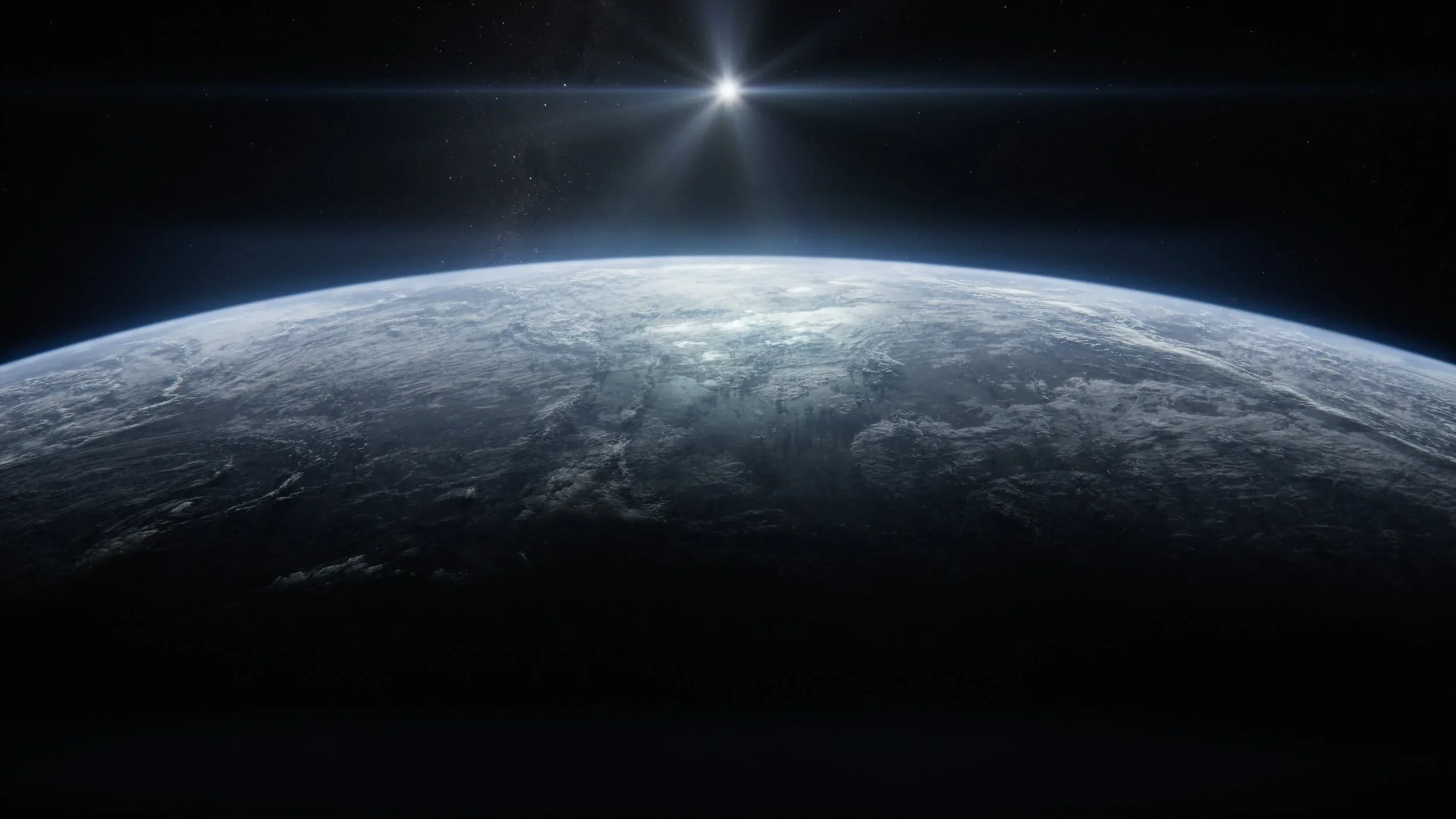
To achieve this, our work focused on combining geological modelling, satellite imagery, and atmospheric simulation to convey key narrative beats: continental movement, climatic shifts, and the evolutionary journey of the dinosaurs.
What We Did
As Dan Tapster, Showrunner at Silverback Films, says, “Lux Aeterna gave us a storytelling tool that enriched the whole series. They didn’t just create beautiful planetary visuals; they created a clear, repeatable visual language for moving through deep time, and that became part of the show’s identity. They brought design thinking as well as VFX craft and were able to deliver on time and on budget thanks to clear communication and cost savings. In short, Lux made the transitions not just clear, but thrilling.”
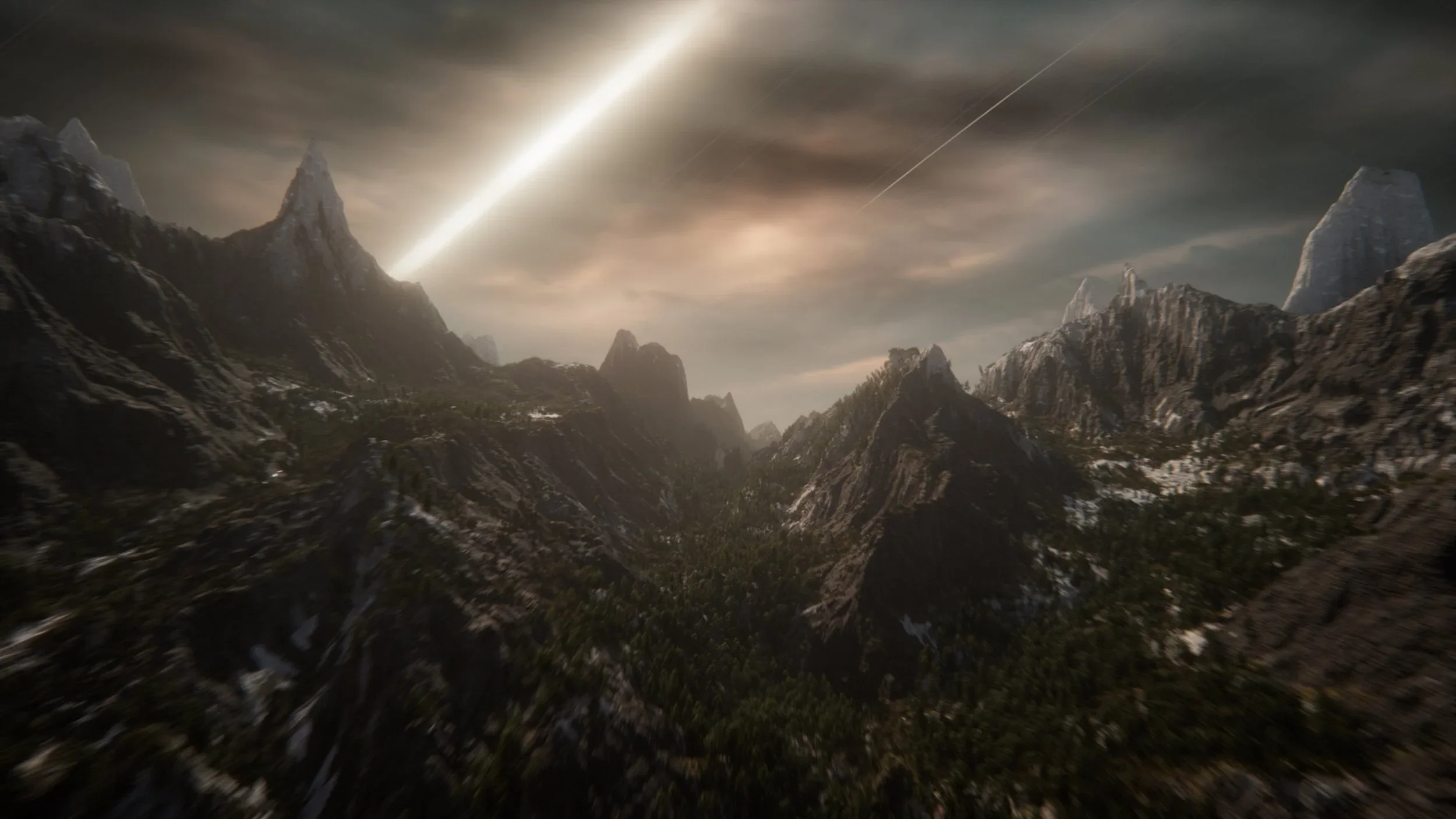
We produced 62 shots in total, more than half of which focus on time travel, including a complex continuous sequence that compresses millions of years of geological and climatic change into just 825 frames. Built as a modular procedural system in Houdini, the environment behaved as a living mechanism. A controllable time parameter allowed terrain, vegetation, erosion, and atmosphere to evolve seamlessly within a continuous sequence, while custom level-of-detail tools and proxy simulations ensured it remained flexible and cost-efficient despite its scale.
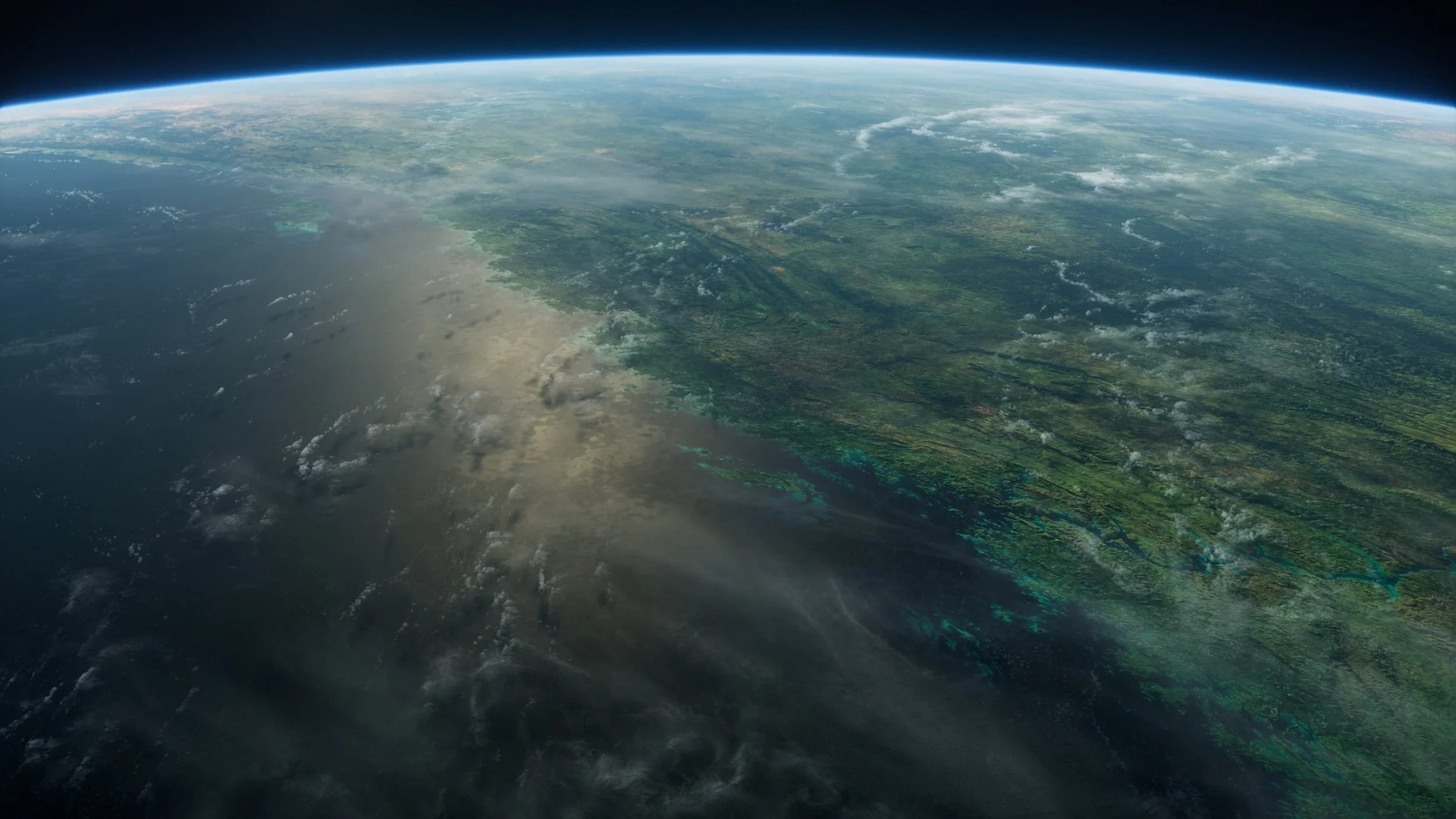
One of the most technically detailed sequences we created visualises the early separation of South America and Africa. We took geo data from the east coast of South America and the west coast of Africa, blended it in Nuke, then recoloured to match the environment understood to exist at the time. We then introduced additional terrain refinement and height data in Houdini.
Ocean simulation, meanwhile, was developed in Arnold. Instead of treating the sea as a flat surface, we used light absorption and colour shift to suggest bathymetry from orbit. High-resolution cloud data and volumetric atmosphere passes were rendered separately and composited in Nuke, to allow for precise integration and grading.
The Results
We successfully engineered a thrilling and engaging visual grammar for time travel in The Dinosaurs. Our sequences orient the audience before the return to creature-level storytelling, and convey important evolutionary and geological changes in an accessible way, with transitions that feel part of a unified progression.
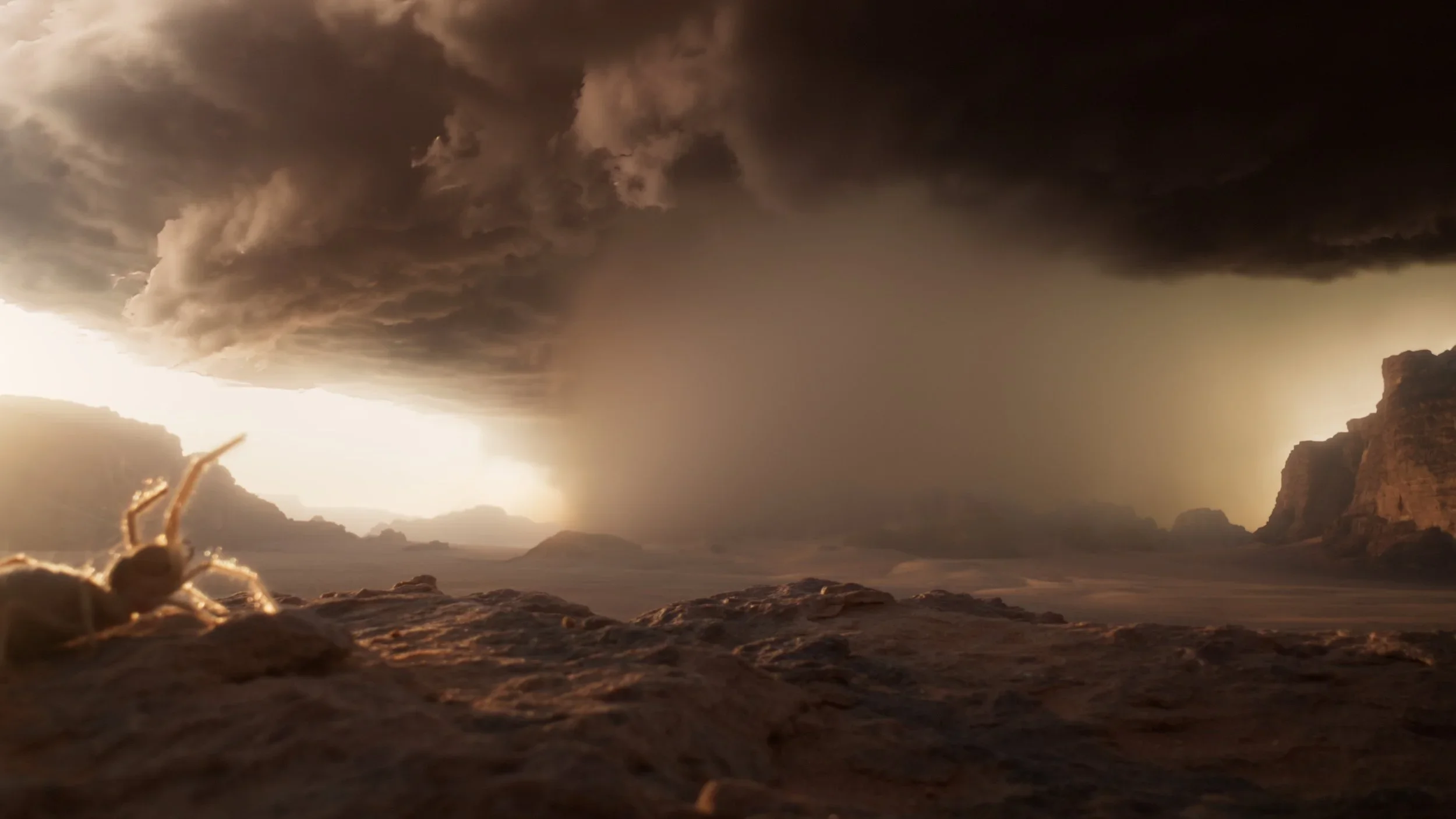
By using high-resolution, present-day satellite data and georectified height maps as a foundation, we were able to transform modern desert terrain into plausible prehistoric marshland, creating cinematic backdrops that bring the audience closer to the narrative and complement ILM’s creature animation. By aligning with ILM on colour, lensing, texture, scale cues, and rhythm, we successfully delivered sequences that maintain continuity beautifully.
This project also demonstrates our expertise in turning information-led briefs into visual storytelling that, while operating largely beneath audience awareness, is crucial in creating a series with real cultural currency.
The Client
Silverback Films
Year Delivered
2025