

Reflecting on the VFX Landscape at the Start of 2026
As we embark on a new year, it’s a prime moment to reflect on where the industry is at, as technology surges ahead and visual effects become more embedded in areas beyond film and TV. Industry-wide uncertainty over recent years has been well documented, but from our perspective at Lux Aeterna, this has reinforced the importance of adaptability at both a creative and pipeline level.
But amidst the challenges, there’s opportunity to be found, as more and more brands hook onto the power of storytelling, with VFX increasingly being seen as a crucial element of creating stories with real resonance. No longer confined to film and TV, the craft is finding its way into interesting industries, spanning everything from fashion to healthcare, and we’re excited to see VFX being harnessed in new and unexpected formats in the future.
In a recent article for VFX Voice, we shared our thoughts on the industry challenges and opportunities that have shaped the way we work, and the learnings we’re taking into 2026…
“In these rocky times of late, we’ve had to think smarter at Lux Aeterna to navigate some of the stalling and non-commissioning of projects due to global economic uncertainty over the last two years.
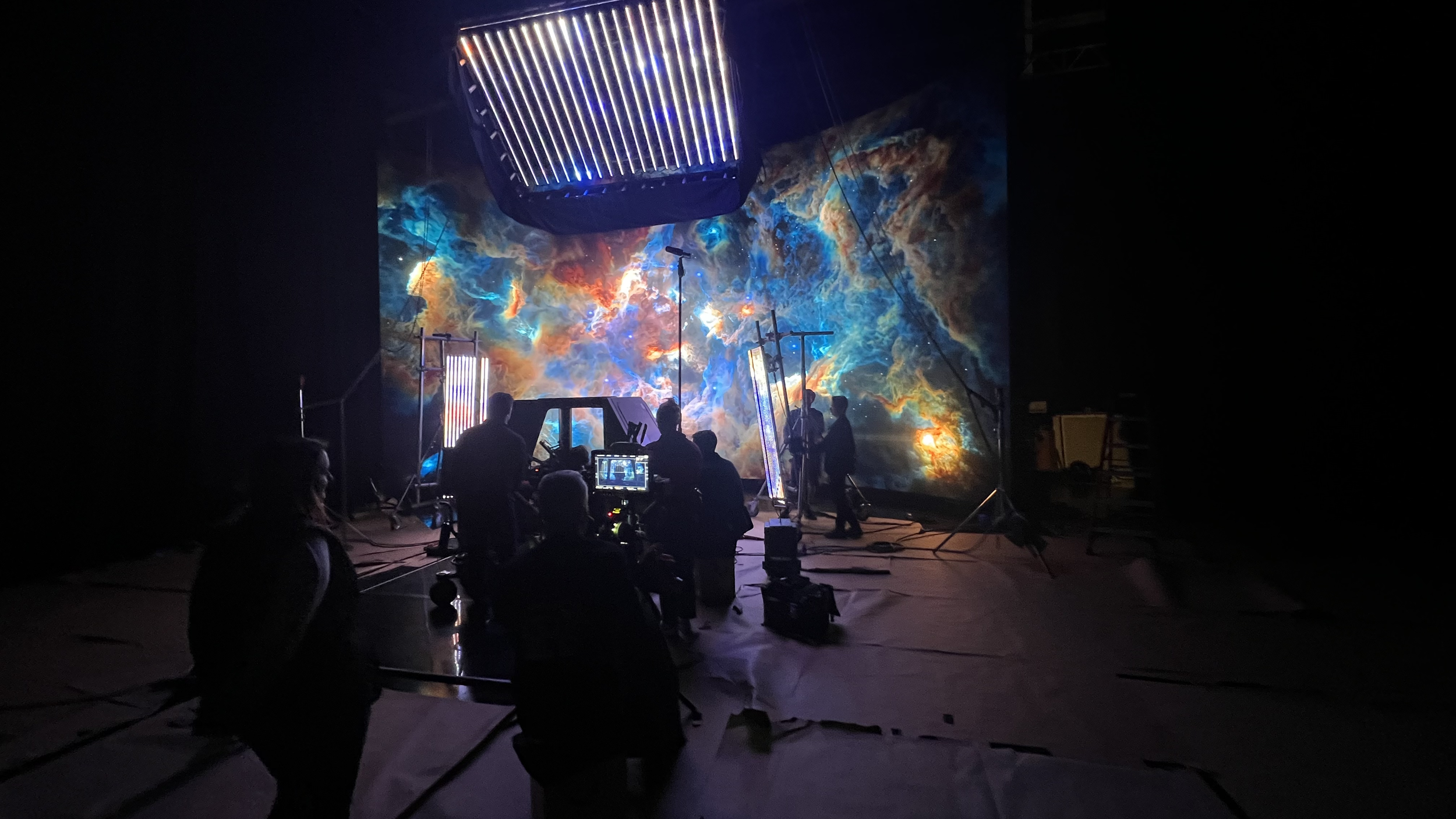
One of the driving forces enabling our flexibility is our investment into our Universal Scene Description (USD) pipeline; it means that we have been able to work quickly, efficiently and optimize management of assets and workflows.We’ve been forging into the virtual production and immersive sectors, creating more cinematic VFX work on large-scale global immersive screen projects and film stages. Working on these large-scale event spaces has been both liberating and creatively exciting.
We’ve also seen huge cost-effective solutions with machine learning processes on some of Lux Aeterna’s more laborious VFX tasks. It’s been instrumental in clean-up and rotoscoping, reducing costs and speeding up turnaround times. Improvements to ML denoising algorithms have also sped up render times significantly, which has a direct influence on our efficiencies with regard to schedules, costs and our carbon footprint. We are seeing more real-time rendering tools such as Unreal Engine, in our pipeline.
This is only going to grow in 2026. It’s helping manage and transform workflows and shortening production cycles. We are seeing more projects utilizing LED volumes with our immersive and film stage work.”
With some exciting projects on our slate for 2026, we’re in a great position to continue adapting and building on our recent learnings, to deliver projects that combine creative excellence, sustainability and cost efficiencies across the film, TV and immersive spaces.
Read the full article and see how our industry peers are adapting and working smarter too.